HP Newsroom
Alaska Airlines has announced the largest aircraft purchase in its history, placing an order for 110 new Boeing jets as part of a bold fleet modernization and international expansion strategy.
The Seattle-based carrier confirmed it will acquire 105 Boeing 737 MAX 10 aircraft and five Boeing 787-10 Dreamliners, with options for an additional 35 MAX 10s. The deal is set to transform Alaska’s fleet, expanding it from around 413 aircraft today to more than 475 by 2030 and over 550 by 2035, including 17 long-haul 787s.
The landmark order signals renewed confidence in Boeing following extensive corrective and quality improvement measures introduced after a 2024 safety incident involving a MAX 9 aircraft. Alaska Airlines had grounded its MAX 9 fleet at the time and later implemented its own oversight system, deploying inspectors to Boeing’s production lines and introducing quarterly audits.
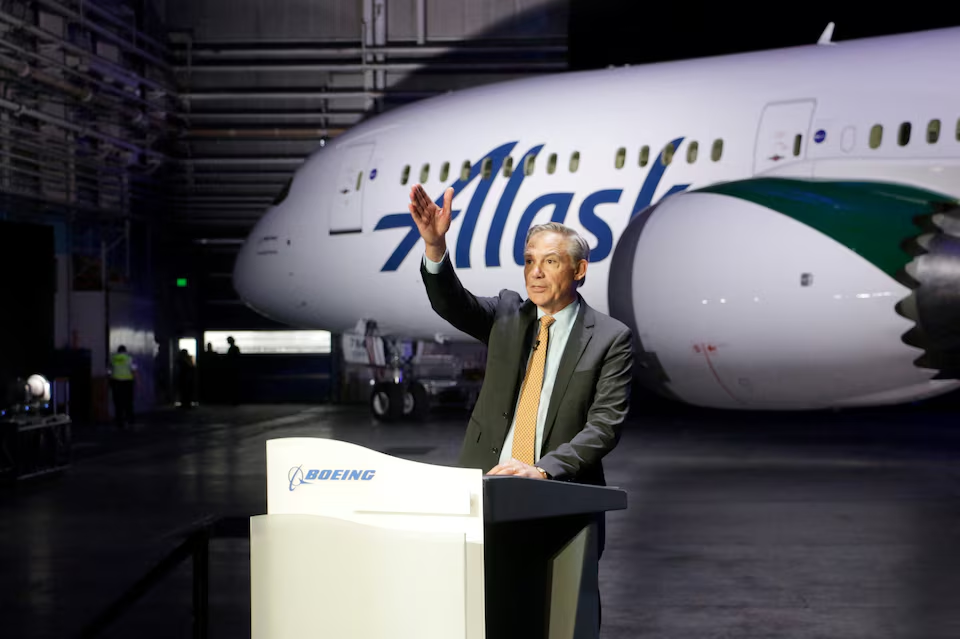
Boeing CEO Kelly Ortberg, speaking at the signing event, called the agreement a major vote of trust. He said the company recognizes the responsibility that comes with Alaska “doubling down” on Boeing aircraft and emphasized Boeing’s commitment to performance, quality, and safety.
Alaska Airlines CEO Ben Minicucci described the move as a turning point for the carrier, stating that the company aims to build the fourth global airline in the United States, capable of competing with the country’s largest carriers. The new wide-body 787 Dreamliners will support Alaska’s expansion into long-haul international markets, including planned services to Europe and Asia, while the MAX 10 fleet will strengthen domestic operations and replace older aircraft.
The order also supports Alaska’s broader transformation following its $1.9 billion acquisition of Hawaiian Airlines in 2024. The two airlines are now operating under a single operating certificate while maintaining separate brands. Full integration of passenger service systems is expected by late April, alongside efforts to establish joint labor agreements across major employee groups.
Despite initial gains, shares of both companies ended the trading day slightly lower. Industry analysts, however, view the order as a strong strategic signal, positioning Alaska Airlines for sustained growth, international reach, and long-term competitiveness.