Food safety and food quality are two closely connected pillars of the food industry. Both play an important role in protecting consumers, maintaining confidence in the food supply and supporting responsible food production. Although the terms are often used together, they address different aspects of food products and require distinct approaches throughout the food chain.
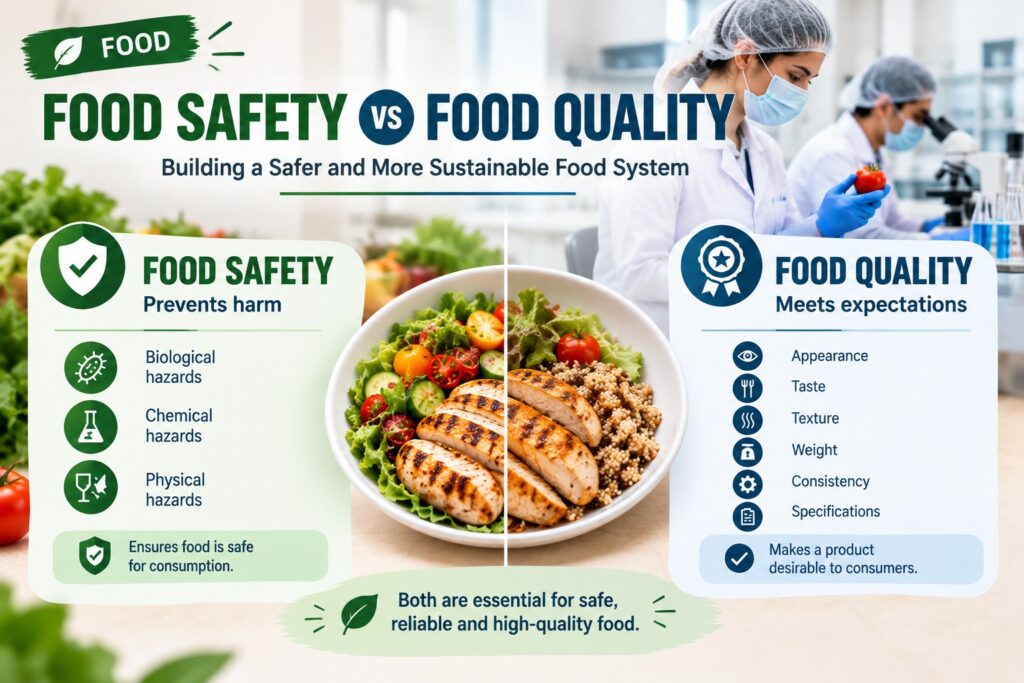
Food safety focuses on ensuring that food does not cause harm to consumers when it is prepared, handled and consumed as intended. It involves identifying and controlling biological, chemical and physical hazards through proper hygiene, safe food handling, temperature control, sanitation and preventive food safety practices.
Food quality, by comparison, focuses on whether a food product meets established requirements and consumer expectations. Factors such as appearance, taste, texture, freshness, weight, consistency and adherence to product specifications all contribute to the overall quality of a food product.
The distinction becomes particularly important because food can appear to be high quality while still presenting a safety risk. A product may have an attractive appearance, desirable taste and appropriate texture but contain a harmful microbiological hazard that cannot be detected through sensory evaluation alone. Conversely, food can be safe for consumption while failing to meet expected quality standards because of changes in taste, texture, appearance or freshness.
For this reason, food businesses need to manage safety and quality as complementary but distinct areas. Effective food safety systems help control hazards and protect consumers, while quality management helps ensure consistency and meet customer expectations. Together, they contribute to stronger food operations and greater consumer confidence.
The importance of these practices also extends to sustainable development. Strong food safety systems support Sustainable Development Goal 3: Good Health and Well-being by helping reduce foodborne health risks. They are also connected with SDG 12: Responsible Consumption and Production, particularly through responsible production practices, quality management and efforts to reduce avoidable food losses. Reliable access to safe and nutritious food further supports the broader objectives of SDG 2: Zero Hunger.
For food businesses, students and professionals, the distinction is simple but important: quality makes food desirable, while safety makes it suitable for consumption. Managing both effectively can help protect consumers, strengthen trust and contribute to a safer, more responsible and sustainable food system.