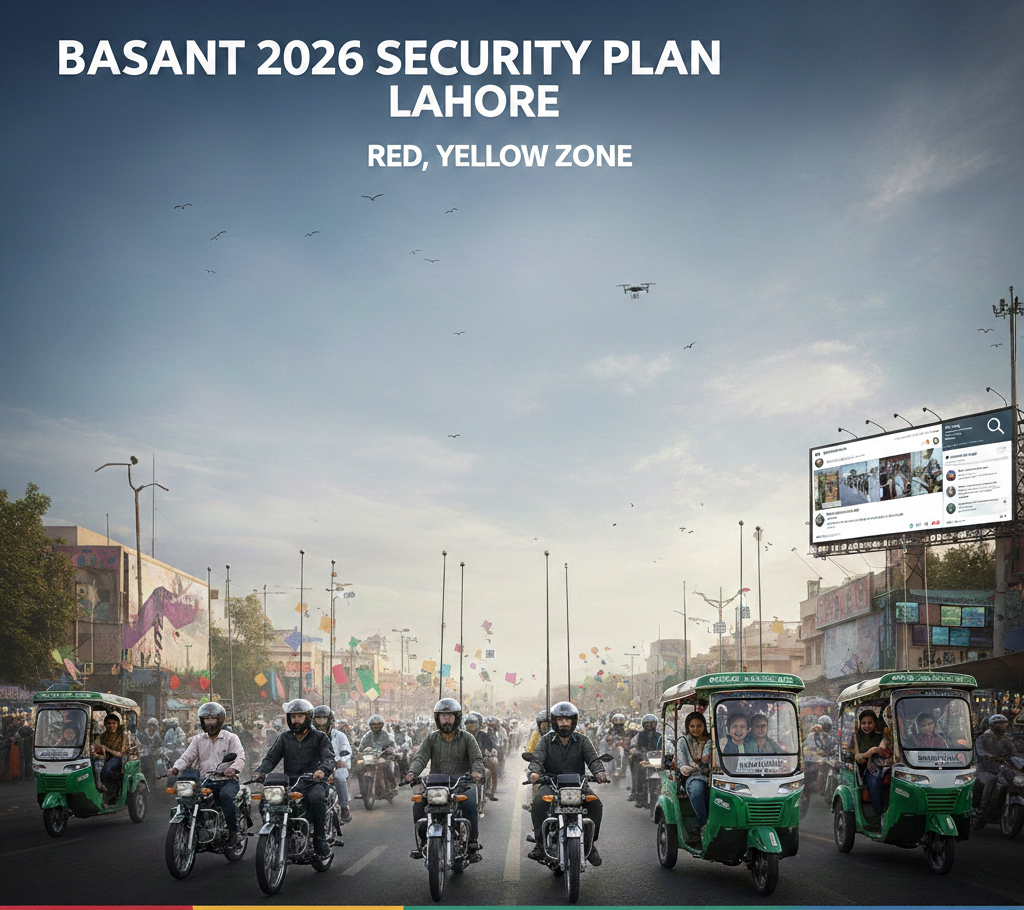
Lahore authorities have finalised an extensive security and regulatory framework for Basant 2026, dividing the city into Red, Yellow and Green zones to effectively manage risks associated with kite flying and related activities.
A detailed police report has been submitted to the Lahore High Court in compliance with its directives, following a petition filed by Advocate Azhar Siddique challenging the Punjab Kite Flying Act and the government’s notification permitting regulated kite flying.
According to the report, the Basant security plan has been developed after analysing data from the past ten years to identify recurring threats, risk patterns and enforcement gaps. The police informed the court that strict implementation of the Punjab Kite Flying Act will be ensured across all zones.
Only officially registered kites and cotton string will be allowed. The use of glass-coated, chemical or metal strings will face zero tolerance. To strengthen accountability and traceability, each approved kite and string will be QR-code registered.
Authorities will conduct round-the-clock monitoring through drones, social media surveillance teams and dedicated control rooms established across the city. Special enforcement squads will act against rooftop drinking, aerial firing and other illegal activities during the festival.
The report further states that helmet use and installation of safety wires will be mandatory for motorcyclists. Entry into designated Red Zones without antennas will be prohibited to prevent incidents related to kite strings. To facilitate public movement during the festivities, the government will operate 5,000 free rickshaws across Lahore.
Rescue services, health departments and traffic police will remain on high alert throughout the Basant period to respond promptly to emergencies and ensure public safety.