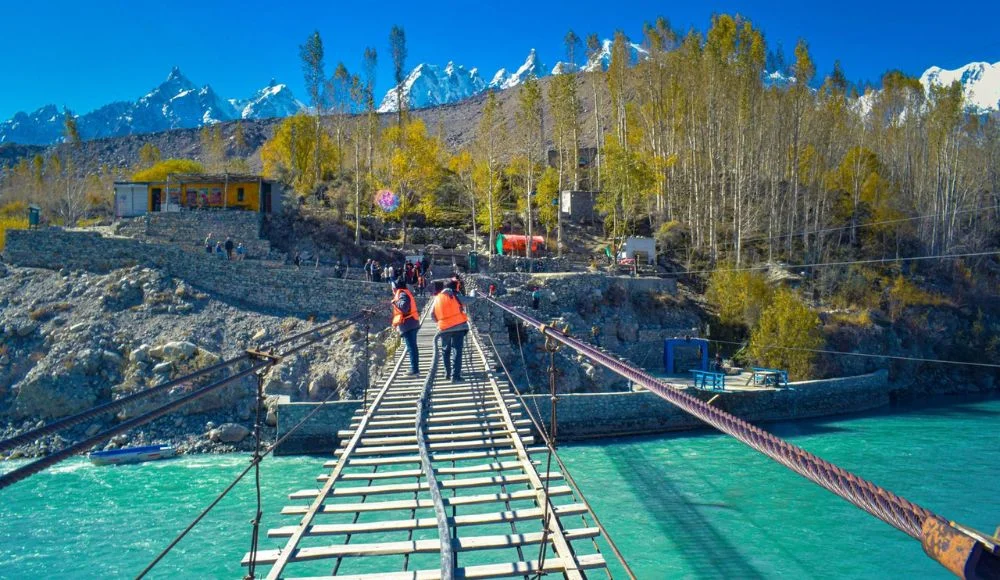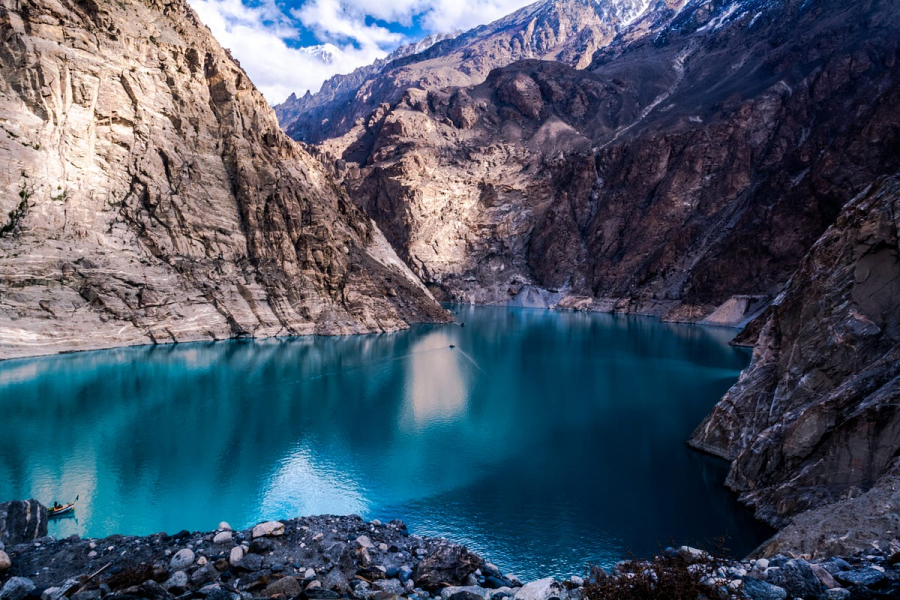
Once celebrated for its striking turquoise-blue waters and dramatic mountain backdrop, Attabad Lake in Hunza is witnessing noticeable environmental changes that are beginning to alter its landscape.
Formed in 2010 after a massive landslide blocked the Hunza River, the lake quickly became one of Pakistan’s most visited tourist destinations. However, recent observations indicate that water levels have shifted in certain areas, with patches of dry land emerging where water once covered the terrain.
Locals and tourism stakeholders have expressed concern over the changing appearance of the lake, which has long been a symbol of Gilgit-Baltistan’s natural beauty and a major attraction for domestic and international visitors.
Experts believe that natural sediment accumulation, geological processes, and changing river flow patterns may be contributing to the visible transformation. While such environmental changes are not uncommon in naturally formed lakes, specialists emphasize the importance of continued monitoring and scientific assessment to better understand long-term impacts.
Despite these developments, Attabad Lake remains one of Pakistan’s premier tourism destinations, attracting visitors with its breathtaking scenery, boating activities, and unique geological history.
Tourism experts stress that sustainable tourism practices, environmental conservation efforts, and responsible resource management will be essential to preserving the lake’s ecological and economic value for future generations.
Disclaimer: This content is for informational purposes only and is based on publicly available reports. The image used is AI-generated and intended solely for reference.