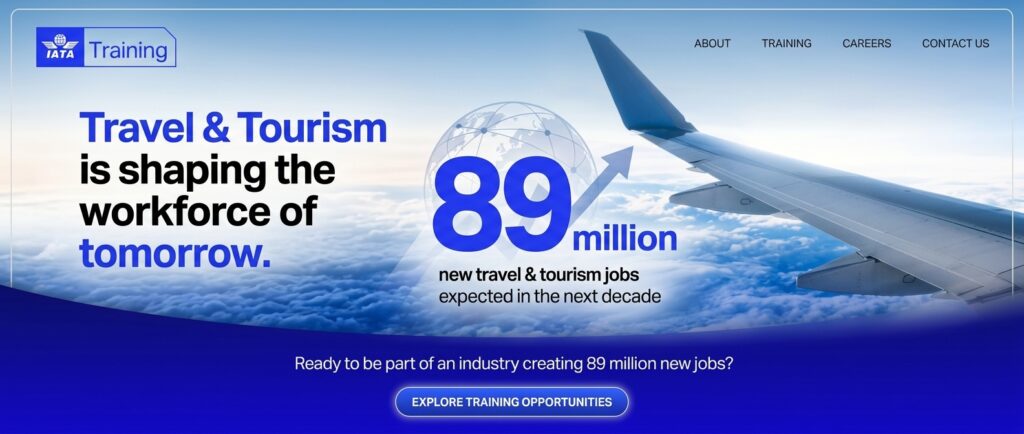
The global travel and tourism sector is projected to generate 89 million jobs over the coming decade, creating potential employment opportunities across aviation, hospitality, tourism operations and specialised travel services.
The projected growth highlights the sector’s potential to support employment, strengthen international connectivity and expand career opportunities across global markets. According to the supplied information, IATA Training has emphasised the industry’s role in “shaping the workforce of tomorrow,” underlining the need to prepare professionals for evolving operational and service requirements.
As travel demand and related services develop, employers will increasingly need workers with relevant technical knowledge, practical experience and customer-service skills. Career opportunities span aviation operations, hotel management, culinary services, tourism planning and other specialised roles within the wider travel and tourism economy.
Professional training institutions are expected to play an important role in preparing new entrants for these opportunities. Industry-aligned programmes, practical learning and recognised qualifications can help bridge the gap between classroom education and workplace expectations.
Workforce readiness is particularly important in aviation and other safety-sensitive operations, where technical competence, operational discipline and consistent service standards are essential. Continued investment in professional development can help employees adapt to changing technologies, industry procedures and passenger expectations.
The projected employment growth also presents an opportunity for countries to strengthen vocational education and develop clearer pathways from training to employment. Collaboration between educational institutions, employers and industry bodies can help ensure that curricula reflect current industry requirements and emerging skills needs.
For young professionals, the travel and tourism sector offers diverse career possibilities across international markets. However, turning projected job creation into sustainable employment will depend on the availability of quality training, recognised qualifications, accessible career pathways and closer cooperation between education providers and employers.
As the global travel and tourism industry continues to evolve, developing a skilled and adaptable workforce will remain central to its long-term growth. Investment in education and professional training can help prepare future employees to meet the demands of an increasingly connected travel economy.