Russian service is widely recognised as one of the classic and refined styles of formal dining, where presentation, precision and personalised guest service come together to create an elegant restaurant experience. Rather than simply placing prepared food on the table, the service style turns the presentation and serving of a meal into an important part of the dining experience.
In Russian service, food is fully prepared in the kitchen before being transferred to attractive serving platters or trays. The server then brings the food to the dining table and serves individual guests, traditionally from the left side, using a serving spoon and fork. This approach allows guests to view the dish before it is carefully portioned onto their plates.

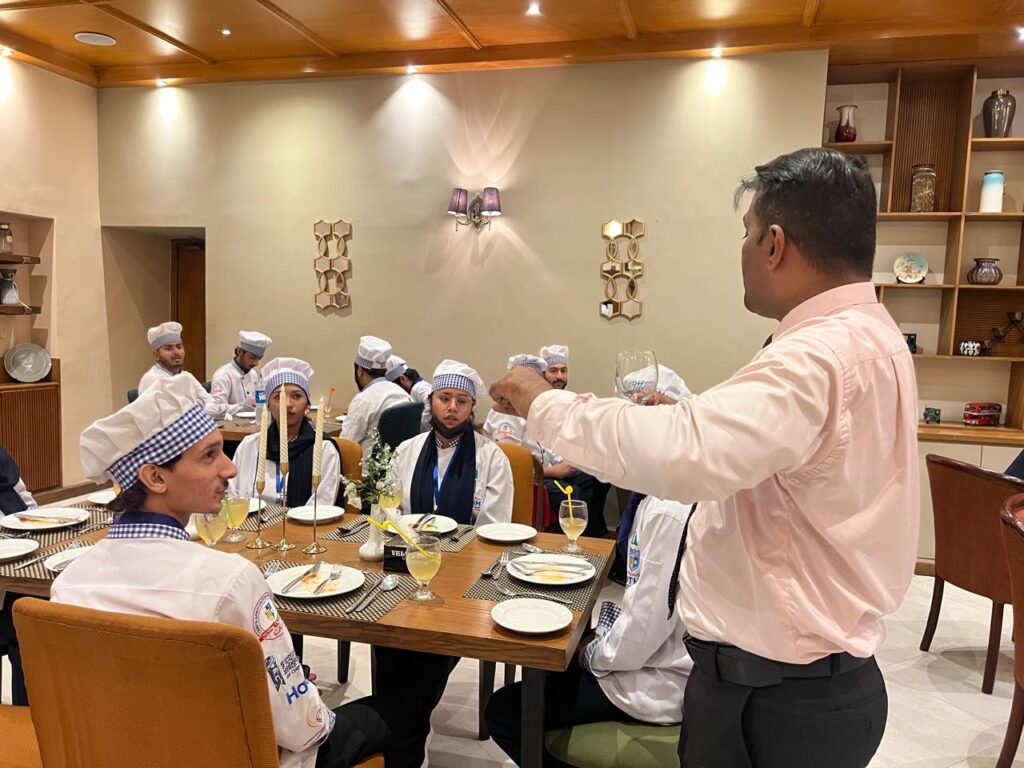
A key feature of the service is that warm, empty plates are placed on the table before the food is served. The server’s movements, posture, handling of equipment and attention to each guest contribute significantly to the overall presentation. The technique requires coordination, confidence and an understanding of formal dining etiquette.
Unlike service methods where guests may serve themselves or receive individually plated dishes, Russian service places greater emphasis on tableside interaction and personal attention. Servers must demonstrate control and precision while ensuring that the food remains visually appealing and is served efficiently.

The style has traditionally been associated with luxury hotels, formal dining establishments and high-end restaurants, where service standards and guest experience are central to operations. It also provides hospitality students with an opportunity to understand how technical service skills can influence a guest’s perception of quality.
At COTHM, Russian service forms part of practical hospitality training, allowing students to experience formal table-service techniques in a controlled learning environment. Through hands-on practice, students develop skills in food presentation, serving techniques, professional posture, coordination and guest interaction.
Russian service demonstrates that fine dining is not only about the food itself. The way a dish is presented, served and experienced can transform a meal into a memorable occasion.