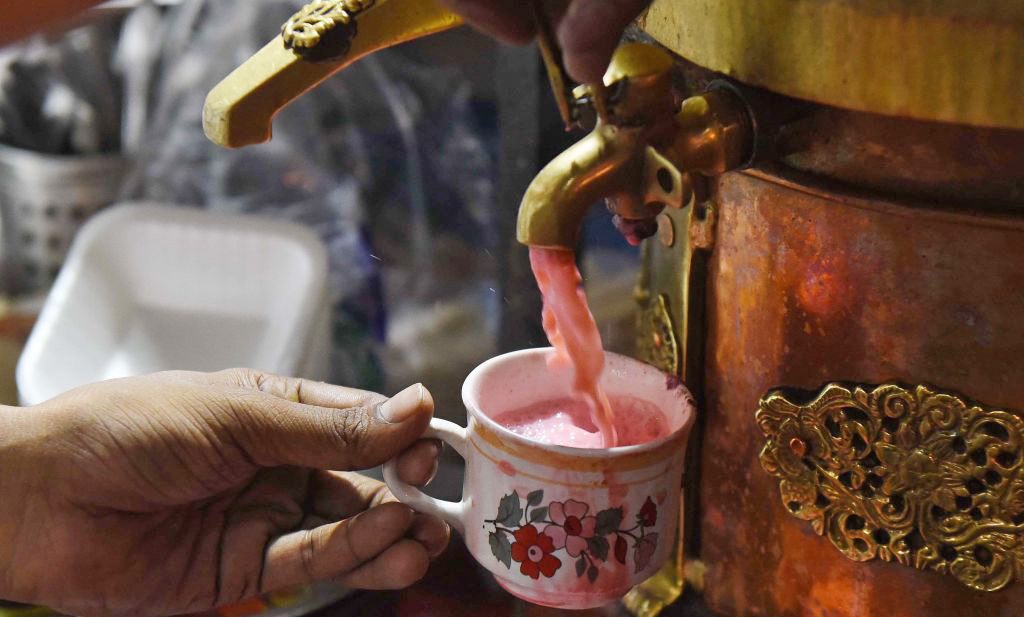
In the vibrant streets of Lakshmi Chowk, amid sizzling street food stalls and bustling tea vendors, one drink continues to capture attention with its striking color and unique taste — the famous Kashmiri chai.
Known for its distinctive rosy-pink appearance, Kashmiri chai has become one of Pakistan’s most beloved traditional beverages. Despite looking like a sweet strawberry milkshake, the tea surprises first-time drinkers with its savory, slightly salty flavor enriched with aromatic spices and crushed nuts.
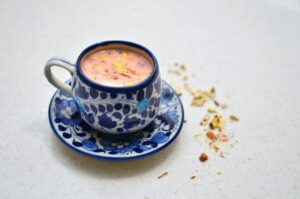
Originally rooted in the Himalayan region, the drink is known by several names across South Asia, including nun chai and gulabi chai, both referencing its unusual flavor and iconic pink hue. The tea is traditionally prepared using green tea leaves, salt, and baking soda — a combination that creates the signature pink color while also serving a practical purpose in colder mountainous climates.
Infused with ingredients such as star anise, cardamom, and nuts, Kashmiri chai is especially popular during winter months and is often enjoyed alongside traditional breads like kulcha, girda, and tsochwor in Kashmir.
Over the years, the drink has evolved beyond tradition into a cultural trend across Pakistan. Upscale cafés now serve Kashmiri chai-inspired desserts, including cheesecakes and pastries, while the iconic “tea pink” shade has become fashionable in wedding wear, formal attire, and lifestyle aesthetics.

Beyond its culinary appeal, Kashmiri chai carries emotional and cultural significance for many people in the Kashmir region, where tea gatherings symbolize warmth, comfort, and resilience during difficult times.
Today, from the valleys of Kashmir to the lively food streets of Lahore, Kashmiri chai continues to unite tradition, culture, and comfort in every steaming cup