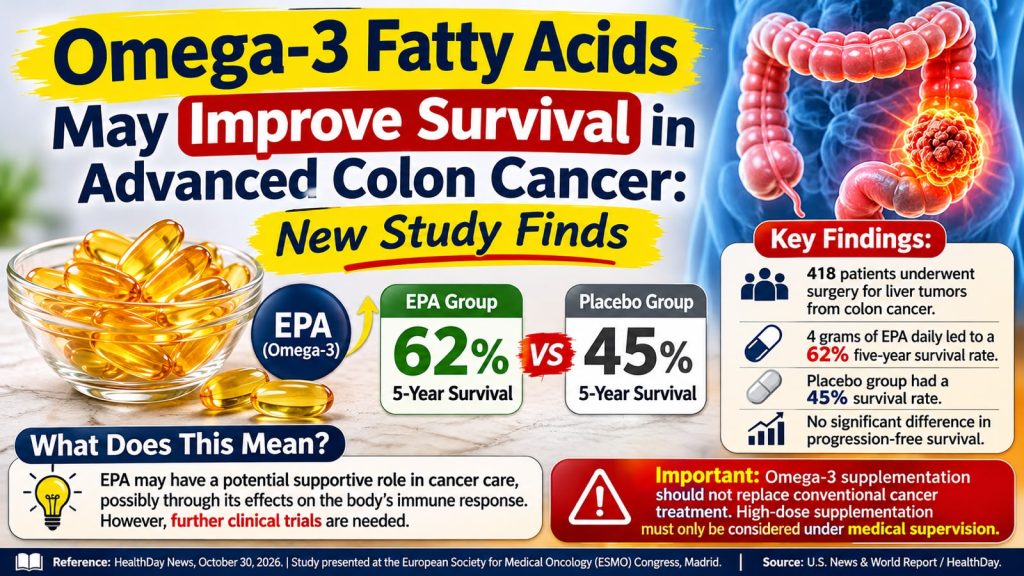
A new clinical study has highlighted the potential role of a specific omega-3 fatty acid in supporting long-term survival among patients with advanced colorectal cancer. Researchers reported that high-dose eicosapentaenoic acid (EPA), an omega-3 fatty acid, was associated with improved five-year overall survival in patients undergoing surgery for colorectal cancer that had spread to the liver.
The findings emerged from the Phase III EPA for Metastasis Trial 2 (EMT2), a multicentre, randomised, double-blind, placebo-controlled clinical trial sponsored by the University of Leeds in the United Kingdom. The research involved 418 patients scheduled for surgery to remove liver tumours originating from colorectal cancer across 13 specialist hepatobiliary surgery centres in England and Wales. The results were presented at the European Society for Medical Oncology (ESMO) Congress 2026 in Madrid, Spain, on October 25.
According to the trial findings, patients receiving 4 grams of highly purified prescription EPA daily recorded an estimated five-year overall survival rate of 62%, compared with 45.1% among participants receiving a placebo. Researchers also reported an approximately 32% lower risk of death in the EPA group compared with the placebo group.
The treatment was initiated before surgery and continued for up to four years. The study aimed to investigate whether EPA could provide additional benefits alongside established medical and surgical care for patients with colorectal cancer liver metastases.
The ASCO Post+2
Important Findings and Clinical Implications
Despite the encouraging overall survival results, the study did not meet its primary endpoint of progression-free survival. Median progression-free survival was 13.5 months among patients receiving EPA, compared with 12.9 months in the placebo group. This means the treatment did not demonstrate a statistically significant improvement in delaying cancer progression or recurrence.
Researchers have suggested that EPA’s potential effects on inflammation, immune activity, and the body’s biological response to cancer may warrant further investigation. However, the precise mechanisms behind the observed survival difference remain under study.
ecancer+2
What Does This Mean for Cancer Care?
The findings offer an encouraging direction for future cancer research, particularly in exploring how nutritional and biological interventions might complement conventional cancer treatments.
However, it is important to distinguish between the specific prescription-grade EPA formulation investigated in the trial and ordinary over-the-counter fish oil supplements. The results cannot be interpreted as evidence that all omega-3 supplements provide similar benefits.
Further research, peer-reviewed publication, and clinical evaluation will be important before EPA can be considered a standard supportive treatment for colorectal cancer.
Medical Advisory: Patients should not use high-dose omega-3 supplements as a replacement for surgery, chemotherapy, or other prescribed cancer treatments. Anyone considering EPA supplementation, particularly during cancer treatment or recovery, should consult their oncologist.
The EMT2 findings represent a promising development in oncology research, highlighting the importance of continued investigation into supportive approaches that may improve long-term outcomes and quality of life for people living with advanced cancer.