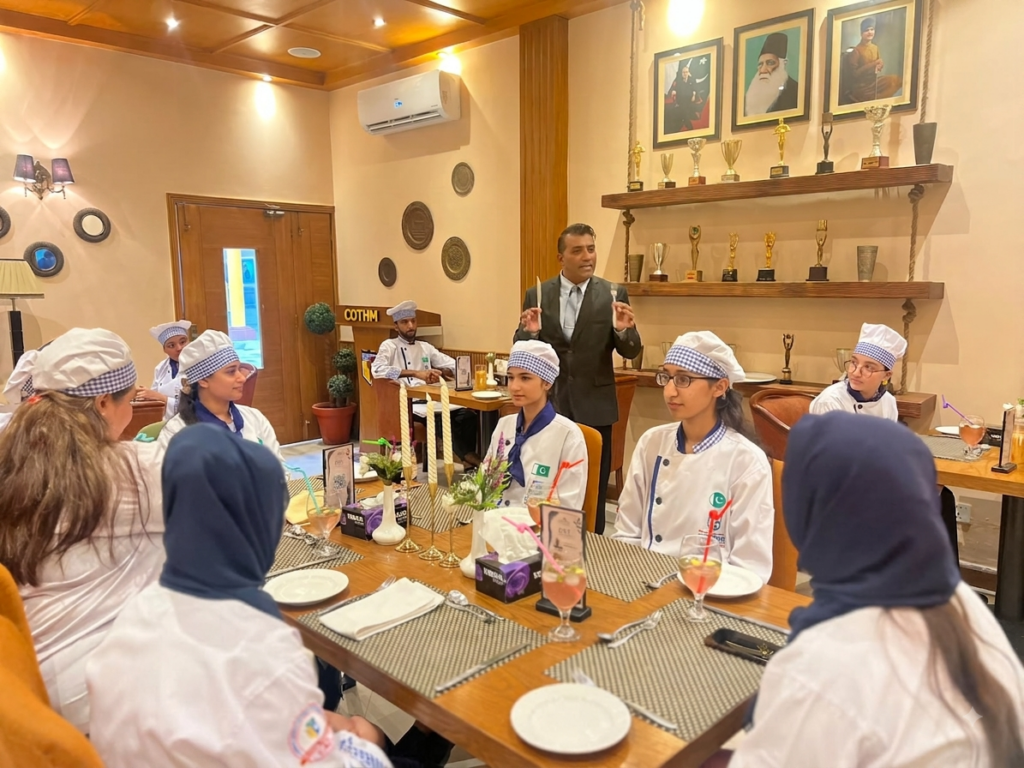
In the world of hospitality, dining is far more than simply enjoying a meal. It is an experience shaped by presentation, professionalism, cultural awareness, and attention to detail. For hospitality professionals, understanding dining etiquette is an essential skill that can influence the entire guest experience.
At the College of Tourism & Hotel Management (COTHM), students are introduced to Continental dining etiquette as an important component of their professional hospitality training. Through practical sessions, mock table settings, demonstrations, and guided practice, students learn how to confidently navigate formal dining environments and apply professional standards in real-world hospitality settings.
More Than Just Forks and Knives
Continental etiquette involves much more than knowing which piece of cutlery to use. It reflects a person’s awareness, confidence, courtesy, and professionalism at the dining table.
For students preparing for careers in hotels, restaurants, fine dining establishments, cruise liners, and other international hospitality environments, these seemingly small details can make a significant difference.
COTHM’s Food & Beverage faculty focus on turning theoretical knowledge into practical skills, allowing students to experience the complete dining environment rather than simply learning etiquette from textbooks.
1. Seating and the Napkin
One of the first rules of formal dining is knowing how to handle the napkin. Once seated, the napkin should be placed neatly on the lap rather than tucked into the collar.
This simple practice demonstrates table awareness and establishes a professional tone from the beginning of the meal.
2. Understanding the “Outside In” Rule
A formal Continental table setting may include several forks, knives, and spoons for different courses. The basic principle is straightforward: work from the outside in.
The outermost cutlery is generally used for the first course, with the diner gradually moving toward the cutlery placed closest to the plate as subsequent courses are served.
Understanding this arrangement helps hospitality professionals guide guests confidently and maintain a smooth dining experience.
3. The Silent Language of Cutlery
Cutlery can also communicate with service staff without words.
When a guest is still eating, the fork and knife can be positioned in an open or crossed arrangement on the plate to indicate that the meal is not yet finished.
When the guest has completed the course, the cutlery is placed together in a parallel position on the plate, communicating to the service team that the plate can be cleared.
For hospitality students, understanding these signals is particularly important because professional service involves recognizing guest cues without unnecessarily interrupting their dining experience.
4. Grace and Courtesy at the Table
Good dining etiquette is also about communication and personal conduct.
Speaking with food in the mouth, chewing with the mouth closed, maintaining appropriate volume, and avoiding unnecessary noise are fundamental practices at a formal dining table.
These habits help create a comfortable and respectful environment for everyone sharing the meal.
5. Soup and Bread Etiquette
Students also learn appropriate techniques for handling common dining items.
Soup should be consumed carefully and quietly, with the spoon used in a controlled manner. Bread, meanwhile, is generally broken into manageable pieces by hand rather than cut with a knife.
These details may appear simple, but consistency in such practices contributes to the polished service standards expected in professional dining environments.
Why Continental Etiquette Matters in Hospitality
Learning Continental etiquette is not simply about adopting a particular cultural style of dining. For hospitality professionals, it is about developing the ability to operate confidently within international service environments.
A hotel manager, restaurant professional, food and beverage executive, or cruise hospitality professional may interact with guests from diverse cultural backgrounds every day. Understanding formal dining conventions therefore becomes part of their broader professional skill set.
This is why practical training remains central to hospitality education at COTHM. Students do not simply study dining etiquette as theoretical content. They practice table settings, service procedures, guest interaction, and dining protocols until these skills become natural and professional.
By the time students graduate, they carry more than academic qualifications. They also develop the confidence, discipline, presentation skills, and professional polish required to perform effectively in the international hospitality industry.
In fine dining, professionalism is often communicated before a single word is spoken. The way you present yourself at the table can become your first introduction.