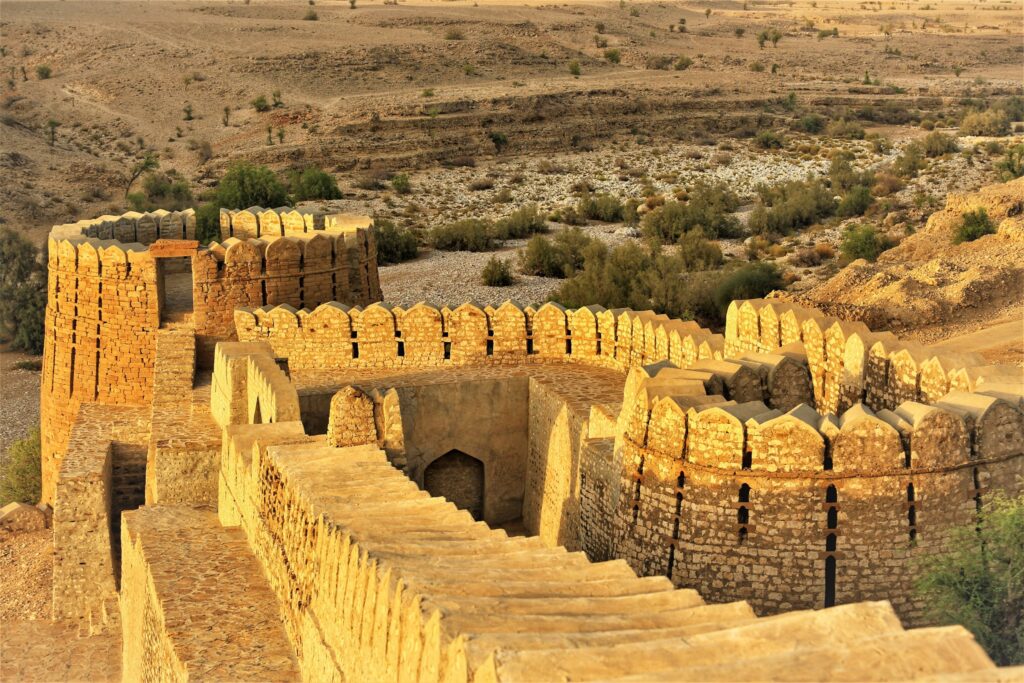
Rising majestically from the rugged hills of Sindh, Ranikot Fort, often called the “Great Wall of Sindh,” remains one of Pakistan’s most extraordinary historical landmarks and is widely believed to be the largest fort in the world by perimeter.
Spanning an impressive 32 kilometers (20 miles), the colossal stone fortification winds through the dramatic mountainous landscape of Jamshoro District, creating a breathtaking fusion of history, architecture, and natural beauty that continues to fascinate historians, archaeologists, and travelers from around the world.
Despite its global significance, the true origins of Ranikot Fort remain one of South Asia’s greatest historical mysteries. Historians believe the fort has undergone multiple phases of construction, expansion, and restoration over several centuries, reflecting the influence of different civilizations that once flourished in the region.
Its towering defensive walls, massive gateways, strategically positioned watchtowers, and hilltop citadels showcase remarkable engineering and architectural ingenuity. Within the sprawling complex lie notable structures such as Meri Kot and Sher Garh, both of which add to the fort’s immense historical and cultural value.
Surrounded by dramatic rocky mountains and picturesque landscapes, Ranikot Fort has become a favorite destination for history enthusiasts, photographers, adventure seekers, hikers, and both domestic and international tourists looking to explore one of Pakistan’s hidden treasures.
Heritage experts continue to advocate for greater conservation efforts and increased international recognition of the site, emphasizing its immense potential to become one of South Asia’s premier cultural tourism destinations. Improved preservation and global promotion, they believe, could further elevate Pakistan’s profile as a country rich in history, archaeology, and cultural diversity.
Today, Ranikot Fort stands not only as an architectural masterpiece but also as a powerful reminder of Sindh’s glorious past and Pakistan’s enduring civilizational legacy. Its towering walls, breathtaking scenery, and centuries-old mysteries continue to inspire visitors, making it one of the nation’s most treasured historical landmarks.